

I saw this posted while walking home last night. I don't know what it means exactly but I'm curious to find out. Maybe Brooklyn Heights has some mystic underground that I'm not aware of.
Ministry - Every Day Is Halloween (12" version)
Showing posts with label Homeless Wizards. Show all posts
Showing posts with label Homeless Wizards. Show all posts
Wednesday, December 2, 2009
Occult Gathering


Thursday, January 8, 2009
jonathan - li song

jonathan - li song
---------------------------------
An acknowledged classic exclusive. On the heels of Heldon, it's some extremely rare, awesome seventies German deep scifi-prog, with a powerful head-nodding drum groove that's very DJ Shadow-worthy. On top of the solid Bonham pound there's heavenly shimmering organ chords like on Popol Vuh and cheerful analog flutes. I really want to hear this song with hip-hop scratches. Remember how on Endtroducing there's a part that uses the break from "Sunday Bloody Sunday"? You could do something like that with this. Look out for an exclusive "808s and Drum Breaks" remix here soon.
---------------------------------
here is the backstory of finding this album. two summers ago my glacial lakes partner jonathan came to visit brave and I in Berlin, where as is our custom we were holded up for the season, practicing in Prenzlauer Berg, spieling fahrrads, hanging with falcon, and drinking beer on the streets. there's a good story involving being a hero goose that is too long to attend to here. Suffice to say one weekend afternoon we were scouting around the Mauer flea market, poking through records, when I handed a copy of the Jonathan album to its namesake, and we beheld its lovely serendipity - you see the music of Jonathan is performed by a keys & drums duo, which is exactly the same lineup of my band with brave. The coincision of these elements had a near astral intensity. J, however, in an odd move, put the record back, noting its high price tag. Curiously, that was only one of two magic flea market finds that day which would fail to make it back to the States with us - brave later procured a fantastic druid garment that quickly became an inofficial band outfit, truly coronating him as the homeless wizard he is. That find too somehow missed rescue, cosigned to the absurdly spacious sublet apartment we left behind in Kreuzberg.
Needless to say, it's not hard to regret passing up purchasing a tantalizing obscure record that bears your own name, especially when the cover art is your name in huge stone letters on the moon, and there's a kind of apple that's also your name floating above it. Also, trying googling this album. We all thought it lost to the dustbins of time, until one day stina and I were in a random East Village record store and spied it, there, hanging on the wall! the Jonathan record!
The End
Sunday, July 13, 2008
A Brief History of Ambient
A Brief History of Ambient Vol 1 - Disc One
A Brief History of Ambient Vol 2 - Disc Two
A bloody stomper of a comp. A comp stomper.
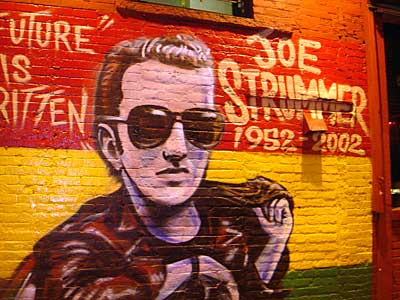
There is a well-known graffiti homage to Joe Strummer in the East Village, which you have undoubtedly passed by in a state of mild distraction, during one of your many boozy, late night perambulations, the sort that ends with the impromptu ingestion of fried dough and a gnawing predilection for dialing individuals with whom, all things considered, it is probably best you maintain no further contact. You probably should just go ahead and delete their number now, while you read this, presumably at your office, and presumably sober, during one of your daily cookie breaks. [Pret a Manger is good]. Further contact, you know in the back of your mind, will lead only to further sorrow, and quite possibly a trip to the men's health clinic.
The image depicts the Clash singer wearing sunglasses, his jacket thrown over his shoulder, accentuated only with a phrase which became one of the band's many unofficial slogans, "The Future Is Unwritten."
This shouldn't be understood to say that this is a property belonging only to the time of what has not yet taken place. Because the past is also unwritten: the steady, inexorable course of present time, in all of history's incalculable twists and inversions, is constantly rewriting the past, making the hidden sonics of its concealed treasures echo in a new key.
Re-engagement with the past is especially fun in the sort of proto-time that we love to go on about at AC, in those heady, experimental open-ended periods of artistic intensity which only retroactively become parts of a movement or can be understood as contributing a genre.
Brian Eno, as every schoolchild knows, is widely credited with coining the term 'ambient music,' and the apocryphal account of the genre's inception involves Eno in an incapacitated state, lying in bed with a broken bone of some sort, listening to a record which had been put on but at an improperly low volume, such that its sonic contents were experienced at the threshold of audibility, wavering in and out of range of the human ear. Like any good materialist, Eno saw this as a new potential to be explored. The musical revolution that followed was a fulfillment as well of Erik Satie's desire to make music "to mingle with the sounds of forks and knives at dinner," rather than something to be consciously, attentively devoured by the audience. Music became wallpaper, became sculpture, became practical, became that most deliciously minor layer of stimulation that cushions you from the harsh opacity of empirical reality.
All your usual suspects are here on this comp, Mr. Fripp, Mr. Eno, Mr. Harold Budd, Mr. Tangerine Dream. Fripp & Eno's acknowledged classic "Evening Star" is here, evidence alone of Mr. Fripp's status as the Eric Clapton of Boring Music. The whole thing is just an epic list of early ethereal compositions and bugged-out melodic drift. Get with it, it wears a beard. Homeless wizards listen to it while doing yoga. Also Harold Budd's piano playing is just sick.
BTW supposedly Eno was as well influenced by a Miles Davis track called "He Loved Him Madly," which is supposed to be some epic ambient jazz dirge tribute to Duke Ellington. Does anyone have this?
Here's a ridiculously cool interview with Eno where he explains the principles behind his "Music for Airports", in which he explains the need for having music tailored for public spaces, how it should be composed so it doesn't interfere with other sounds (human communication, announcements), and so on. Subtitled in Dutch, thank God.

Sunday, May 25, 2008
Popol Vuh: Letzte Tage - Letzte Nächte
http://www.divshare.com/download/4580580-39a
This German space rock group's sixth album, from 1976, one of their greatest achievements. Blissfully clangy/reverbed out guitars that are precursors to the sounds of Television and Sonic Youth. Beauty of the ethereal Orient. Serene invocations, otherworldly power and tranquility.
"Last Days, Last Nights" is how you would say this title in English.
We know a sort special optics which these sort of last times can throw upon a world: a lens of holy twilight. For example, when a stay of some duration comes to an end, and, against the backdrop of their imminent disappearance, the things of one's world are cast in a glow that must be a glimmer of that which covered the earth the day that its creator came to rest.
That's why so often when I have made somewhere my home for a season, the last one or two weeks are inevitably suffused with this kind of light, tinged by melancholy, by innocence, joy, and by the fading warmth of unrealized promise.
In the world of men, this light only shows up around the edges: during beginning and ends, and those moments of grand interruption. It is forever dimmed by engagements, projects, the "yeas and nays of busy people."
But the epic fade-out is not the only way things can end. There are countless ways. Another way something can end is when its participants have no idea which way this is, or even finally if it is a way at all, or if the end is really happening. This is the case of Beckett's Endgame, which I saw recently at BAM Theater, with John Turturro as Hamm, the central character.
It is characteristic of Beckett's writing that it always circuits between great metaphysical intensity and the banal preoccupations of the profane world. This is how allegory works, by moving between two dimensions without ever reconciling them, without ever fully carrying out a translation between them.
In other words, while Endgame confronts grand concerns of human significance and the depths of metaphysical nihilism, it is also about a couple breaking up. In exactly the same way that "Should I Stay or Should I Go?" by The Clash is about a break-up.
One exemplary passage of this:


- CLOV:
- So you all want me to leave you.
- HAMM:
- Naturally.
- CLOV:
- Then I'll leave you.
- HAMM:
- You can't leave us.
- CLOV:
- Then I won't leave you.
- (Pause.)
- HAMM:
- Why don't you finish us?
- (Pause.)
- I'll tell you the combination of the cupboard if you promise to finish me.
- CLOV:
- I couldn't finish you.
- HAMM:
- Then you won't finish me.
- (Pause.)
- CLOV:
- I'll leave you, I have things to do.
Clov never leaves. The play ends with Clov, having retreated to his room to dress himself, reappearing in the door dressed in his travel clothes, which in their formality appear all the more out-of-place considering he's about to venture into a "The Road"-type post-disaster world of endless gray where all nature has been extinguished. My friend pointed out that this final scene strikes an ambiguous tone, because as the curtain falls, from the standpoint of sheer gesture it seems like Clov could also be returning from a long voyage, and that the scene is actually a beginning instead of an end.
What doesn't come into play in this play is the problem of afterlife, which would be like a ghostly inversion of Endgame's scenario: this would be when you think you've made an end of something, but it stays around, the end is not an end but it persists, it has a life of its own, it has a story of its own, an afterlife, to be explored and borne forward.
In this case however, Endgame's insistent dialogic refrain still holds weight:
- HAMM (anguished):
- What's happening, what's happening?
- CLOV:
- Something is taking its course.
Monday, May 12, 2008
Epic Soundtracks / Turkish Star Wars
*For more on 60s/70s cult soundtracks see http://www.scorebaby.com
BUT FIRST
before the main event, a perverse appetizer, one long overdue for classical acknowledgment.
Dünyayı Kurtaran Adam (The Man Who Saves the World) is a 1982 Turkish film, part of a wave of low-budget productions from the region which slavishly and at times bizarrely imitated American Hollywood blockbusters, occasionally resorting to flat-out stealing clips from the originals when necessary. The Man Who Saves the World is thus referred to as "Turkish Star Wars", there are likewise Turkish Superman, Star Trek, etc - also Turkish E.T., in which the title character appears not as a lovable, charming plush-toy creature, but a lop-sided, flatulent space potato whose visage makes you cringe when the children hug it.
What is awesome about this clip from Turkish Star Wars shouldn't require much more explanation on my part. I will note that globally speaking, Americans are in the unique position of seeing their own culture bootlegged, imitated, xeroxed into oblivion, more than any other nationality. Like when you go to the market in Marrakesh and they're selling Beebok shoes and it's really funny. I am secretly grateful as an American that there is not some other larger, more cultural impactful country than my own that causes me constant anxiety of influence, whose pop culture I dearly love like delicious junk food but despise and need to distance myself from at the same time.
Thus part of America's cultural fate is the uncanny encounter with stuff like Turkish Star Wars, where we get our own bullshit thrown back at ourselves in mutant form.
By the way, these Turkish films often snip hodge-podge from American soundtracks, throwing them altogether for fun, you can recognize for example "Battlestar Galactica" in the following clip:
NOW, AC STEREO, MAY EDITION: EPIC SOUNDTRACKS
These are psychedelically epic, in contrast to either heroically or romantically. I wanted to put some Phillip Glass here but I couldn't download any from itunes and don't own any, inexplicably. The following line-up contains a lot of usual suspects, most of whom are prolific enough to justify combing through some odder folds in the back catalog. Comments appear below, followed by a massive dose of carefully curated clips.
1. Tangerine Dream - Beach Scene (from Thief)
80s synth-soundtrack warlords whose resume in this field is too epic for consideration. Alex B gave me this track, from Michael Mann's Thief, which plays right after James Caan, the titular thief of banks, has just pulled off the sickest heist ever, and he gets to go celebrate on the beach with his woman and James Belushi.
2. Christian Bruhn - Aravanadi - der Baron
Bruhn is a 70s-80s German soundtrack composer, this is for a German kid's TV series called Timm Thaler, an update of the Faust narrative in which the title character sells his laughter to the Baron LeFuet (anagram of "Teufel", German for "Devil").
3. Bo Hansson - Black Riders & Flight to the Ford
Not really for an actual soundtrack, and we've covered it before, but dammit, it's a 70s swedish-prog imaginary soundtrack to Lord of the Rings, and it rules.
4. Ennio Morricone - Fuggire Lontano
A deep boogie TV cue. I don't know much about it. I do know that you should probably get the two-disc "Crime and Dissonance" set that came out a few years ago, because it is well-bugged.
5. Freedom Orchestra - Lucifer Rising, Part I
Part of Kenneth Anger's classic 60s psychedelic Satan movie. The soundtrack was going to be by Jimmy Page originally, but it finally fell to Bobby Beausoleil, who I think recorded part of it in prison or something. Nicely evil. Like not too much evil, like when you eat too much Oatmeal Cookie Chunk ice cream and you lie there like a sickly, friendless whale and think you might barf.
Psst: here's the whole soundtrack. It's a bit mud-fi, but pretty much as triumphantly psych-evil as you're going to get.
Freedom Orchestra - Lucifer Rising
6. Popol Vuh - Aguirre II
From Herzog's film Aguire: The Wrath of God, accompanies the insanely beautiful opening shot. Both Popol Vuh and Herzog have a similar artistic strength, that of engaging with romantic/exoticist/hippie types of tropes and traversing them until they become something beautifully otherworldly. PS: the next time someone in casual conversation disparages the Mellotron, play them this haunting, distant choir that spreads its alien angelic beauty all through the heavens.
7. Goblin - Patrick
Pretty much the best epic soundtrack group ever. I mean, "Suspira"? Those crazy bells and shit? "Patrick" is from the movie of the same name. Guess what? Quiet Village ripped it off for their track "Pillow Talk". They took the scary warbliness out of it and made it a super-chill yacht jam.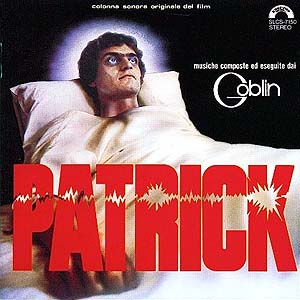
8. Terry Riley - In the Summer
From some ponderous 70s eurotrash movie called "Lifespan" starring Klaus Kinski. One of the minimalist master's only film compositions, it's also I think the only track by him that has vocals on it.
9. Giorgio Moroder - Paul's Theme (Jogging Chase) From "Cat People"
Ok do I have to explain who he is? He's like Goethe, he pretty much invented everything. Plus, he produced not only "Take My Breath Away" from Top Gun, but "Call Me" by Blondie from American Gigolo. Damn.
10. Tully - Follow Me from "Sea of Joy"
Some hippie-dip soundtrack to an old Australian surfing movie. I bought this for some reason at Other Music, weirdly mesmerized by the accompanying description, despite the fact that 1. I don't care about hippie-dip folkie folk and 2., it's about surfing in Australia. In any case, most of the soundtrack is a wash, except for this track, because it is suitable moody and dark, and thus epic.
11. Marc Wilkinson - Fiend Discovered and Titles from "Blood on Satan's Claw"
We close with some actual orchestral soundtrack stuff, from a 70s British horror film not dissimilar from "The Wicker Man". Also the soundtrack has nice track titles like "Claw in the Classroom."
Now please enjoy some audio/visual excursions. Where possible, the clips reflect the aforementioned tracks, sometimes they don't because this was not possible, or because I don't care.
Opening to "Lucifer Rising"
Beach Scene from "Thief"
Opening shot from "Aguirre: The Wrath of God"
Final Episode 13 of "Timm Thaler"
"Blood on Satan's Claw"
Dream Sequence from "Cat People"



Monday, April 21, 2008
Endless Grift: Got Live If You Want It
ENDLESS GRIFT
TOMORROW
TUESDAY APRIL 22ND 10PM
Parkside Lounge, 317 E. Houston
Entrance Fee: No Dollars
CHRIS ALEX BILLY
CHROME EAGLE SOARING
Sunday, March 23, 2008
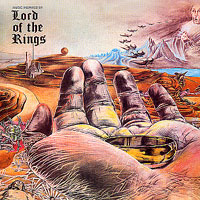
Bo Hansson: Lord of the Rings
Bo Hansson - Lord of the Rings
Sophie B. sent us this. The first and best-known of four instrumental albums recorded by the Swede Bo Hannson in the 1970's. Given her line of work, when listening to this evocative, spaced organ-driven prog record, we can't help but imagine not the raging hordes of Middle Earth armies or the picaresque tales of a friendly midget, as one might easily associate with such an album, but instead a visual accompaniment consisting of a long thin white path upon which equally long, thin and white feminine figures are striding in smart, classic outfits.
Bo Knows: Guitar
Hansson garnered recognition in the sixities as part of a duo, Hansson & Karlsson, who released three instrumental albums, eventually attracting American guitarist Jimi Hendrix, who recorded a cover of their composition, 'Tax Free'.
Bo Knows: Trippy psych records inspired by classic works of fantastic literature
Lord of the Rings (Sagan Om Ringen) was recorded on an island off of Stockholm, on a borrowed 8-track recorder, the only one in Sweden at the time, in friend's summer home.
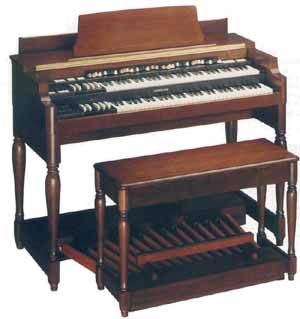
Bo Knows: The Hammond Organ {El Orgel Hammondo}
The hammond organ, the real star of Hansson's record, was designed to imitate the function of a pipe organ's ranks of pipes in multiple registers by using additive synthesis of waveforms from harmonic series. Various functions of the Hammond derive from different harmonic combinations. For example, there is a button that says percussion, but this doesn't produce a drum sound. Instead, it refers to combination of second and third harmonic overtones, which produces a kind of jagged, distant, percussive tonal quality.
Here are two images of the Teleharmonium, a late 19th-century precursor of the Hammond from which the latter adopted its electro-mechanical tonewheel and likewise its principle of additive synthesis.
For more, time can be spent with this BBC documentary clip on the Hammond, in honor of its 70th birthday in 2006.
Stay tuned for next week for more on additive/subtractive synthesis and the harmonic series, featuring notes from Tony Conrad's recent lectures.
Today's entry is sponsored by O'nieals on the corner of Grand and Baxter in Lower Manhattan. O'nieals: home of the weekly saturday night Rowdy Cougar Meltdown (we ride for Cougar anthem 2007: Hips Don't Lie by Shakira)


Monday, March 17, 2008

Friday, March 14, 2008
The Red Cross for Melting Faces
Cosmic Brooklyn's Religious Knives
There are two kinds of ethics - there are the guidelines and principles that accompany you throughout day, and form the implicit horizon for judging acts of right and wrong: for example, no matter how much you might want to stick a letter opener into the meaty neck of the crowd control manager at the New Jersey hotel casino where you're staying, not because of the tumultuous scene that would ensue, or because of a belief in the absolute sanctity of life, (a principle which is usually easy to uphold but on shaky ground when it comes to New Jersey hotel casino managers), you refrain because it would certainly mean that your friends would be cheated of a long night of slowly losing all their money at organized gambling.
The other kind of ethics is the kind that finds its prime 20th-century formulation in Heidegger's Being and Time: the ethics of the call. The injunction which strikes you like lightning, out of nowhere, seemingly sent from no one, but which you have the utmost existential duty to follow. The call has a number of religious/missionary overtones. Sometimes you spend years waiting on the other end of the line, waiting for the phone to ring, to hear the call.
Our friends in Religious Knives were recently disturbed to their ethical cores to hear of the near-disastrous lack of face-melting that is currently scourging the West Coast, and have organized a tour in hopes of remedying this. Faces are going around, running errands, hanging around in shopping malls, paying money to see movies starring Gena Davis, and all the while they remain tragically un-melted. See RK on these dates and support their efforts to sonically force flesh to deliquesce from the skull.
3.15.08 - Monstersorri House - Seattle, Washington*

3.16.08 - The Artistery - Portland, Oregon*
3.17.08 - House Show - Arcata, California*
3.18.08 - Luna’s Cafe - Sacramento, California*
3.19.08 - The Hemlock Tavern - San Francisco, California*
3.20.08 - The Terminal - Oakland, California
3.21.08 - The Smell - Los Angeles, California
3.22.08 - Echo Curio - Los Angeles, California
*With Ex-Cocaine
Friday, February 29, 2008
TOO MUCH INFORMATION (#1)
DOOMSDAY SEED VAULT OPENED IN ARCTIC NORWAY
ANALOG SPACE WIZARD
[1971] Deep synth adept Dan Sandin leads the viewer into a 'Five Minute Romp Through the IP" (Image Processor)
sent by analog adept Mike B
ART BRUT METH FIEND
from A&E's Intervention. Get to the part about her journals. Don't do drugs.
sent by visionary doodler Maya M
EROTIC FALCONRY
Soft-core Ornithology
STUFF WHITE PEOPLE LIKE
latest: #78: Multilingual Children
sent by white person XSTINA
>>In particular, the 10 Rap Songs That White People Love Best (from catsandbeer.com)
ARACHNID GRIFT
Male Spiders Play Dead for Poon
sent by natural grifter Alex B.
RAP ACHIEVES EUROCHEESE INTENSITY
Wiz Khalifa - Say Yeah / frontrunner for 2008's most ridiculous sample, unholy offspring of club music infusions in Timbaland, Timberlake, Outkast, Akon, T-Pain
sent by synth baller Jonathan F.


Tuesday, February 5, 2008
Why Go Beardo?
The Casual Wizard - Weekend Prince
Cosmic Parsley – Daniele Baldelli
Never Satisfied – Sarah Dash
We Can Make It – Purple Flash
Evening Standard – Jesse Rose
Flashing Lights – Kanye West
Stick Up Kid (Weekend Prince Remix) – Lyfe
Train (Ewan Pearson 6/8 Vocal) Goldfrapp
Walking Through Heaven – Chris & Cosey
I Wanna Dance With Numbers – Girls on Top
The Devil in Us – Black Devil Disco Club
Front Man (Idjut Boys Girthius Maximus Mix) – The Emperor Machine
Effective Placebo Affect – In Flagranti
All Flowers Must Fade – Daniel Wang
Lily was Here – Dave Stewart & Candy Dulfer
The Zoo (Weekend Prince Remix) – R. Kelly
Commune – Rub N Tug
Sorcerer – White Magic
Life’s a Beach - Studio
Mary Jane (All Night Long) – Mary J. Blige
It is generally believed that the father of beardo disco is Daniele Baldelli, DJ of the Italian club Cosmic in the early 80s. When referring to current subgenres of danceable electronic music that derive from Baldelli's sound, 'space disco', 'cosmic disco' and 'beardo disco' are all more or less interchangeable, the last of these terms stemming ostensibly from the appeal that such dense, trippy sounds have for a particular brand of grizzled layabout.
This musical strand and Baldelli's influence have in the past two years or so come again into cultural consciousness, in part because of the sheer sonic experimentalism that its purveyors are afforded. Here is Baldelli, describing his mixing style in an interview with Daniel Wang, himself a current producer of space disco who has recently relocated to Berlin:
For example, I used to play Bolero by Ravel, and on top of this I would play an African song by Africa Djola, or maybe an electronic tune by Steve Reich, with which I would mix a Malinké chant from New Guinea. Or, I would mix T-Connection with a song by Moebius and Rodelius, adding the hypnotic-tribal Izitso album of Cat Stevens, and then Lee Ritenour, but also Depeche Mode at 33 instead of 45, or a reggae voice by Yellowman at 45 instead of 33. I might mix 20 African songs on top of a Korg Electronic Drums (machine) rhythm pattern. I would play a Brazilian batucada and mix it with a song by Kraftwerk. I would also use synthesizer effects on the voices of Miriam Makeba, Jorge Ben, or Fela Kuti, or I would play the Oriental melodies of Ofra Haza or Sheila Chandra with the electronic sounds of the German label SKY.
In part Baldelli's efforts produce a kind of short-circuiting of what's called 'world' music, because the mixes and effects interrupt the ear's understanding of the 'world' and of the different exotic music styles which represent it. It's no-world music, or end-of-the-world music, producing countries that don't exist, much like Eno & Byrne's My Life in the Bush of Ghosts was designed to, and much like some of Werner Herzog's films like Fata Morgana or Lessons of Darkness, which take images of distant lands and alienate the viewer from them until they seem to longer to be documents of reality but emanations from a realm of strangeness.
Beardo Disco, however, does not begin with Baldelli, in Italy, in the 80s, or as music. It begins in a posthumously published story by Franz Kafka, "Homeless Wizards and Casual Pansies", in which the enmity between these two cultures is portrayed as a fable in the desert. The Wizards tell the Beardo Disco DJ he is the only one who can murder the pansies and liberate them, and the pansy scoffs and dismisses this as fantasy. In fact, the only solution to the deadlock, so palpable by way of its concentrated absence in the story, is a dialectical synthesis of the worlds of homeless wizards and casual pansies in the form of beardo disco. In other words Baldelli is the story's unnamed narrator:
Excerpt from
Homeless Wizards and Casual Pansies
by Franz Kafka
“..We know,” the oldest began, “that you come from the north. Our hope rests on that very point. In the north there is a way of understanding things which one cannot find here among the Casual Pansies. You know, from their cool arrogance one cannot strike a spark of common sense. They kill animals to eat them, and they disregard rotting carcasses.”
“Don’t speak so loud,” I said. “There are Casual Pansies sleeping close by.”
“You really are a stranger,” said the Wizard. “Otherwise you would know that throughout the history of the world a homeless wizard has never yet feared a casual pansy. Should we fear them? Is it not misfortune enough that we have been cast out among such people?”
“Maybe—that could be,” I said. “I’m not up to judging things which are so far removed from me. It seems to be a very old conflict—it’s probably in the blood and so perhaps will only end with blood.”
“You are very clever” said the old wizard, and they all panted even more quickly, their lungs breathing rapidly, although they were standing still. A bitter smell streamed out of their open jaws—at times I could tolerate it only by clenching my teeth. “You are very clever. What you said corresponds to our ancient doctrine. So we take their blood, and the quarrel is over.”
“Oh,” I said, more sharply than I intended, “they’ll defend themselves. They’ll shoot you down in droves with their guns.”
“You do not understand us,” he said, “a characteristic of human beings which has not disappeared, not even in the high north. We are not going to kill them. The Nile would not have enough water to wash us clean. The very sight of their living bodies makes us run away immediately into cleaner air, into the desert, which, for that very reason, is our home.”
All the wizards surrounding us—and in the meantime many more had come up from a distance—lowered their heads between the front legs and cleaned them with their paws. It was as if they wanted to conceal an aversion which was so terrible, that I would have much preferred to take a big jump and escape beyond their circle.
“So what do you intend to do,” I asked. I wanted to stand up, but I couldn’t. Two young wizards were holding me firmly from behind with their jaws biting my jacket and shirt. I had to remain sitting. “They are holding your train,” said the old wizard seriously, by way of explanation, “a mark of respect.” “They should let me go,” I cried out, turning back and forth between the old one and the young ones. “Of course, they will,” said the old one, “if that’s what you want. But it will take a little while, for, as is our habit, they have dug their teeth in deep and must first let their jaws open gradually. Meanwhile, listen to our request.” “Your conduct has not made me particularly receptive to it,” I said. “Don’t make us pay for our clumsiness,” he said, and now for the first time he brought the plaintive tone of his natural voice to his assistance. “We are poor wizards—all we have is our teeth and our epic beards. And our robes and sneakers.” “So what do you want?” I asked, only slightly reassured.
“Sir,” he cried out, and all the homeless wizards howled. To me it sounded very remotely like a melody. “Sir, you should end the quarrel which divides the world in two. Our ancestors described a man like you as the one who will do it..."
As concerns the Casual Wizard mix, let it serve as a primer for the curious and ill-informed. My own contribution here is not the inclusion of a number of beardo heavy-hitters and usual suspects, but that of a handful of r&b vocals and remixes - this kind of disco does have a kind of sexuality to it, but it's a white european sexuality, sleek and drifty. Thus the goal is to inject a foreign element, in this case the sweat and sweet musk of American R&B....Rhythm and Beard?
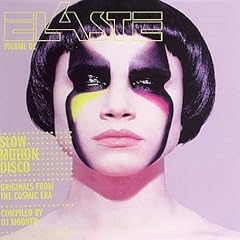
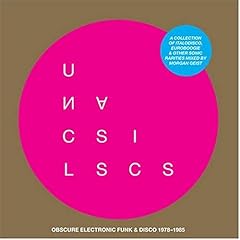
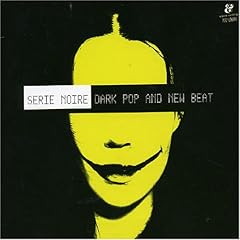
For more on beardo/space/cosmic disco see:




Subscribe to:
Posts (Atom)