louderbach - notes

Don't call it a comeback. Mostly because Bristol's brightest aren't really back, that is, the new record doesn't have much to do with the same place they left off. After ten years, Portishead reappears not to cash in on their mighty trip-hop legacy but to open up a new edgier trajectory out of its ruins. Picked this CurrentTV clip up from Sasha Frere-Jones' New York blog.
http://www.newyorker.com/online/blogs/sashafrerejones/
It's half an hour of Portishead doing all new material live, and it's even better than the album versions. Full band, two drummers, no mercy.
whatever you wanna call their new sound, it's a new understanding of the literal spirit of r&b - rhythm and blues, ill kraut-tempered beats together with desolate torch songs. For a band that doesn't like to perform and comes together every decade to record, they could easily, if they wanted, be a pop powerhouse like that other something-head band.

Following the enormous financial success of “Easy Rider”, Peter Fonda was given full creative control with his directorial debut, “The Hired Hand”. Starring Fonda, Verna Bloom, and the ever-grizzled Warren Oates, the film rested on the dusty shelves of unsung classics for a few decades until Sundance released a DVD version a few years ago. The soundtrack, composed by 60’s folk musician, session guitarist, and one-time member of Dylan’s cortege (he is thought to be THE Mr. Tambourine Man) Bruce Langhorne, is sublime.
The album drifts along like a lethargic river-ride towards a dusty horizon that you’ll never return from. Spare, haunting, and elegant…
THE HIRED HAND by Bruce Langhorne
Relevant Audio:
Section 25 - "Friendly Fires"
Burning Witch - "History of Hell"
French electronic duo Justice, live in concert
1. Let me about what interests me concerning the aesthetics of menace, doom, portent, suspense and so on (in both music and movies). This is a mode of art dealing with rendering to the senses something that is on its way. Something is coming. Most likely, it is coming for you. It's not here yet, if it were here, there would be no need to present it aesthetically.
In this mode, the work of art speaks of something that is going to happen. Or more specifically, can possibly happen. When we say or represent that the arrival of something, a werewolf, or the devil, is imminent, what's meant is that the arrival is really possible.
If we stop here for a second we can hear how kind of strange it is to say that something is really possible, or that a possibility is real. I can't say much more about it here. It's enough to consider that it's a paradoxical coupling. Because if something is real, we think, it's not possible. It just is.
In other words, if something is possible, does it exist?
This is the question that all art of doom and suspense is engaged with. Art doesn't seek to answer this question, but to unlock the multiple opportunities for its deployment.
(It is enough to stop and consider the seven years during which we have lived under the sign of a 'war on terror' to realize that this question is not only an aesthetic question but a political one. You can say, for example, that the great twentieth-century German political theorist and Nazi sympathizer Carl Schmitt built his entire philosophical edifice around this question, or rather, around a particular way of answering this question - the only force, Schmitt argues, that is capable of addressing the full political weight of this question is a strong sovereign. Only he can face and decide on the real possibility of war, killing, destruction, and so on.)
Now the reason why this territory, of menace and suspense, is so fertile for art is because of the field's fundamental ontological tension, that is, its disjunction between what is, and what is not, or what is coming to be. Whether or not the representation of this tension is filed under doom, or under institutional theology (when it speaks, above all, of the coming or return of the Messiah) depends on how the representation understands the resolution of this tension.
In other words, if there is a strife between what-is and what-is-not, and eventually what-is-not is going to prevail, and what-is is not going to be in very good shape once what-is-not comes out on top, then you're squarely in doom country.
The opening track to Section 25's album Always Now, "Friendly Fires", is a very strong example of what we're talking about. Section 25 were something like Joy Division's little brother band, also produced by Martin Hannett and also on Factory Records. The insistent, tribal drums sound out a warning. The relevance of the lyrics, "they're on their way....they're coming to you...no one can escape...this kind of war..." is clear.
Plus I mean, holy shit is this song dope.
2. It's quite possible that music is most fitting for representing doom because our ears hear further than our eyes can see. Sounds are able to project the imminent arrival of something not there at a grander intensity than images. Plus, images, movies for example, have to reckon with not actually showing the arriving horrible thing. Their strategy is limited to showing its effects: think of the trembling glass of water announcing the arrival of dinosaurs in Jurassic Park.
Burning Witch is a proto-version of Sunno))), consisting of Greg Anderson and Stephen O'Malley, the core of Sunno))) and the founders of doom record label Southern Lord. The Southern Lord, it should be said, is Satan.
Banks Violette, a contemporary artist/sculptor known for his heavy metal/satanic-themed work, cast SunnO)))'s backline in salt for this work. The backline is the series of amps used to produce the band's uniquely punishing, overwhelming sound. The effectiveness of this piece lies in the tight psychological/aesthetic connection between the event of SunnO))) performing, and the sound produced by the amplifiers, such that, cast in white salt, the huge amps produce something like a negative photographic image of the concert. It's the artistic technique of subtraction: take away the effect, leave the cause. Leave the cause and visibly suspend it, strip it from its context and purify it. In a sense Violette's work participates in this aesthetics of thrill and suspense: they're coming...the work says....they're coming and they're going to play punishing grinding death metal....while wearing druid outfits...
3. Lastly a note on the religious in contemporary music. Putting aside Christian rock. Because well. Bands like Justice and Sunno)))) engage in an abstraction of religious iconography.
Now there is a long tradition in philosophy and theory that conceives of music as something like 'de-sacralized prayer'. So that music is something like prayer without prayer, without words or content. An opening that doesn't go anywhere. An opening to nowhere, maybe that's all that can be said of art, and the greatest thing about it.
So when band alter religious icons, appear in robes or install the cross on stage, it's in part an index of the way in which all music traverses the religious impulse. They're engaging with the spectacle of the stage show, and all spectacle at its core is religious.
SPOILER ALERT: PRETTY MUCH RUINS THE WIRE SEASON 5 IF YOU HAVEN'T SEEN IT YET
The Wire's Omar Little
Lyfe Jennings - Stick-Up Kid
WKNDPRNS mash-up: Stick-Up Kid/Seelenluft "Manila" (Ewan Pearson Remix)
One of the more decisive moments of the closing end of The Wire's fifth season has to be the gunning down of Omar, who over the course of the show had become a beloved, Billy the Kid-type of outlaw, whose murderous actions were governed by a moral code, which forbid him from taking a victim outside of the drug game, and from using profanity. All things considered, this event, in episode 58, cannot have come as a surprise to any viewer familiar with the show's refusal to spare any of its characters, sympathetic or otherwise, from a chance at the wrong end of a street weapon.
In a recent interview with The Onion, the show's creator, David Simon, the conversation repeatedly revolves around the dramatic significance of Omar's death, at the hands not belonging to one of his several major nemeses, but a young insolent camp, carried out not in the heat of a desperate struggle, but in the midst of Omar buying Newports.
I have to disagree here with Simon's understanding of the difference between classic Greek tragedy and its modern form. Why? Because although Simon does affirm that what his show is doing involves updating Greek tragedy for contemporary urban America, he doesn't mark what's really at stake in this transformation, which doesn't at all involve adopting wholesale the classic, for example, Sophoclean, framework. Here's Simon:
"We didn't kill Omar because viewers liked Omar. Neither did we let him live because viewers liked Omar. It was beyond petition. We weren't being nasty to viewers, and we weren't being solicitous of viewers. We were serving the story. I don't know what else to say. If people didn't realize after this many seasons of The Wire that they were watching a Greek tragedy, writ across a modern American city… And if they thought that there were going to be redemptions and [awarding] of the Fates, they need to get up with their Medea and Antigone and their Oedipus. I don't know what else to say."
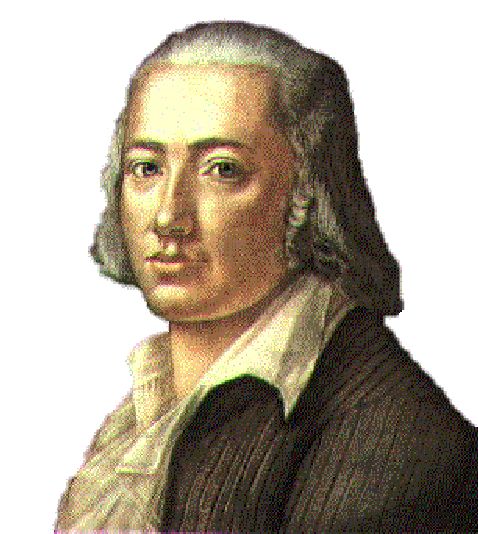
The difference which Simon is eliding here, between the ancient and modern tragic, is most succinctly expressed by the German poet Friedrich Hoelderlin, in an 1801 letter to a close friend. Here is what he writes about the specifically modern form of tragedy:
"For this is the tragic for us: that, packed into some simple box, we very quietly move away from the realm of the living, and not that-consumed in flames-we expiate the flames which we could not tame."
Germany's Friedrich Hölderlin
Being consumed in flames, achieving a Phoenix or Oedipus-like intensity, in which one brings about one's own cataclysmic annihilation, is the Greek tragic. This is not how Omar goes. Gunned down in the convenience store, Omar doesn't go up in flames, he lies down in the street. In theological terms, the Greek tragic hero couples with the gods, and is destroyed in their fire. The modern tragic hero, if he's still a hero at all, operates in the space traced out by the absence of the gods, not, as in ancient Greece, their unbearable overproximity.
Lyfe Jennings
In honor of Omar, you'll find links above to Lyfe Jenning's 'Stick-Up Kid' (sent to us by Braja) which is a pretty solid Usher-R. Kelly-type smooth jam, except for chorus, which is 'I be robbin these niggas...I'm a stick-up kid, that's how I live, I admit it..' In other words it's a smooth criminal ballad. The WKNDPRNS mash-up stitches Jenning's jam on top of elements from Ewan Pearson's remix of 'Manila', which has a great goofy-weird vocal about a dance party breaking out during an ominous airplane flight.