

Peter Gabriel - I Don't Remember
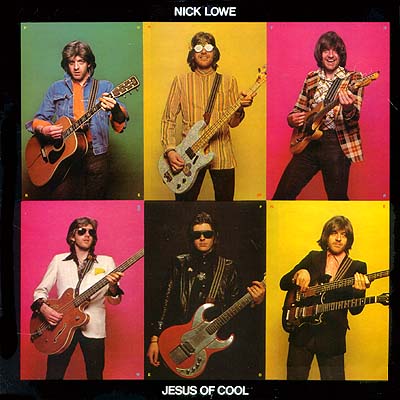
Nick Lowe - I Love the Sound of Breaking Glass
Billy Idol - Hot in the City
William Judd - Shibuya Overdrive
RECENTLY OVER PIZZA a friend expressed the latent fear that she had been born too late. While attending an academic conference featuring several luminaries of 70s radical feminism, my friend felt a melancholic twinge - nowhere could there be found today the same kind of pervasive revolutionary energy, the kind that sweeps the mob together into the movement, the kind that serves as a north star under whose ceaseless light all things gain new contour. She was speaking, it seemed to me, of the problem of the aftermath. Of the fact that after the revolutionary event, life stubbornly insists on inching forward, on outgrowing whatever smooth new cloak we thought we could wrap it in.
It seems as well that one needs more heroic strength in the aftermath than during the time of the event. Anyone can follow the mob up the stairs of the Bastille. Or shoot out those clock towers. Anyone can choose sides. But to keep a lonely vigil once the ecstasies and tumult have quieted, to keep looking for a way forward when there are no more bearded kings to come down from the mountain, their mouths full of prophecy.
This is a big problem for successful artists, what to do after you've hit your peak. The documentary called 'Comedian' is a striking example of this: it follows Seinfeld in the wake of the glory surrounding his massively successful television show, as he trudges onward and returns to the standup circuit, figuring out what to do next.
German note: the name 'Seinfeld', Sein-feld, might be read as 'field of being'. Such is the existential problem of the aftermath - its protagonists wander free in a field of being, lacking orientation.
This artistic aftermath is a big problem for rappers, whose street-tough personas start to appear somewhat ill-fitting once they become 'rappers of a certain age', no longer with chips on their shoulders (they've been brushed off). The aftermath is such a problem for rappers, Dr. Dre went and named his record label after it.
RZA's latest track, 'Can't Stop Me Now', seems to reflect this miasma. Why does RZA need to tell us now, twenty years after 36 Chambers, that we can't stop him? Where does he get the idea that we would want to, or think we could?
RZA - Can't Stop Me Now
In honor of the aftermath we present four songs that gain their strength from the aftermath of David Bowie. The four songs here are particularly indebted to the works of Bowie's Berlin trilogy. "I Don't Remember", from Gabriel's eponymous debut solo record, captures the spare, icey funk and paranoid lyrics, "I Love the Sound of Breaking Glass" serves a condensation of the whole first half of the album 'Low', (noting that one of the songs on this Bowie record is called 'Breaking Glass', and that Nick Low-e's restrained white-boy rhythms distinctly evoke "Sound and Vision"), Billy Idol channels the swaggering posture and flamboyant urban romance, and William Judd jacks in to the ambient eno-produced instrumentals that take up the second halves of 'Low' and 'Heroes'.
Bowie, it should be said, is a bit like Goethe - every new genre he decided to try his hand at, he reinvented. When there's an event, like the Bowie event or the Goethe event, it tends to have traumatic effects for those who come after. Sometimes, those who come after are jilted lovers whose paramours have always-already been gone, who mourn for days they never knew. Other times, they are carefully keeping the way open, preparing for tomorrow, continuing to do the steady, loving labor of the apostle, spreading and pronouncing the word, again and again.
Sunday, April 13, 2008
Bowie Biters in the Aftermath


Sunday, April 6, 2008
The Joys of Strange Proximity
or, Excursions in the Acid-Rainforest
Lula Cortes and Ze Ramalho - "Trilha de Sum"
Most of the rhetoric surrounding the reissue of Paebiru centers around the trope of the 'lost classic', of which this album is a shining example. The attendant myth involves almost all the original copies being lost in a warehouse fire. A lot of the pleasure of being an obscure music obsessive involves the joy of strange proximity: bringing what has been far, what has been distant and forgotten, once again into the light, to pull something from oblivion and hold it to one's ears. Then one hears not only the sound of the record, but as well the colorless ruins of the past, something almost like the crackle of old vinyl. An album that sounds something like a tropacalian mutation of Amon Duul, aka some deep acid-rainforest shit, and also it was supposed to be destroyed in a warehouse fire, is a stellar candidate for such an obsessive pleasure.
In this way, the context risks overshadowing the content. From Stylus Magazine's review: "With all the murk surrounding the album, it’s easy to overlook the frankly silly nature of what we’re dealing with. Say the following out loud: Paêbirú is an obscure Brazilian psych concept album about the four elements (earth, air, fire, water)... age and scarcity lend this record a legitimacy—and audience—it might otherwise be unable to muster."
Not to say the record doesn't have its transcendental bursts. The opening track, presented here, is evidence enough to the contrary.
The sounds of this 60-70s style of loose, improvised psychedelic music, with its genre-bleeding and unbounded vibe, are often a sonic shorthand for a historical contemporaneous understanding of freedom. It's one bound up with the 'passion for the real' mentioned in the previous post, as Alain Badiou has characterized it. Badiou has said that from a philosophical point of view, the twentieth-century is marked by a 'passion for the real'. That underlying the diverse artistic, intellectual and political movements of the last hundred years is a fundamental reckoning with a drive towards the 'real', in the sense of the visceral, the immediate, the raw, all what supposedly lies beyond the mediated, illusory, ideological facades that distract us in modern life.
It's not hard to connect how bugged-out rainforest jams might participate in this passion, which in the lives of educated urban white persons can often manifest itself as a fascination for raw-dog style, for the sounds and images associated with the concrete, the immediate, the intuitive, the pre-critical, the ecstatic. Psych record collecting = passion for the real.
It should be noted that in The Century, Badiou formulates an alternate passion for the real, but one that doesn't look for the real among any kind of 'thing', any kind of 'identity' - not even a rare record. This passion is associated by Badiou with Malevich's White on White - which is about uncovering the real as the gap between place and taking-place.
In other words, to continue the short circuit between Badiou's philosophy and music, the central claim about The Century is about the passage from psych jams to minimal beats.

Thursday, April 3, 2008
Brutal Cuts and Digital Dust
AC proudly welcomes you to its 100th post
Feel free to add AC to your list of favorite blogs on your preferred social networking site
Boubacar Traore - 'Mariama'
Operating Theatre - 'Ah Love Ah Love'
I moved. Again. By my own count, that makes ten times in two years. Ever since I gave up that peaceful, sunny apartment where I lived with Ben the art critic and militant commie, a place where we organized a Lacan reading group, obsessed about 'Rasputin' by Boney M and 'Dragostea din tei' by O-Zone.
One of the great benefits of casting your entire material life into transition is the chance to explore the way things reveal themselves anew amidst the dusty upheaval of packing crates, masking tape and duffel bags. The volume of Walter Benjamin's essays Illuminations opens with his reflections on this phenomenon, entitled 'Unpacking My Library', where he writes that all obsessions are about chaos, but that the obsessions of a collector are full of the chaos of memories.
Walter in the library
You may find this helpful to remember when you stand surrounded by those oversized Kmart tupperware storage containers overflowing with heaps of those curious objects of all forms that will not allow themselves to be abandoned by you no matter how little they seem to have any immediate importance in your life whatsoever. "Ah..a chaos of memories..."
Making my way through the heap, old things become new again. A favorite worn shirt has surfaced, an old pair of shoes seems back in style, a book suddenly has something new to say. I have a particular problem with my old books in that they often seem to be in a state of indignant confrontation when I meet them, as if I'm returning after leaving a highly intimate conversation in mid-sentence.
Throwing things away is the best. Then one gets to feel like Andre Breton or Stalin, excommunicating and purging all that is interfering with the revolution. This kind of brutal cut, Alain Badiou writes, is paradigmatic for twentieth-century revolutionary movements:
"the real, conceived in its contingent absoluteness, is never real enough not to be suspected of semblance. The passion for the real is also, of necessity, suspicion. Nothing can attest that the real is the real, nothing but the system of fictions wherein it plays the role of the real. All the subjective categories of revolutionary, or absolute, politics - 'conviction', 'loyalty', 'virtue', 'class position', 'obeying the Party', 'revolutionary zeal' and so on - are tainted by the suspicion that the supposedly real point of the category is actually nothing but semblance. Therefore, the correlation between a category and its referent must always be publicly purged, purified.." (The Century, p.52-53)
Alain chillaxing
In other words, the 'passion for the real', which Badiou names as the driving revolutionary force of the last century, despite its drives, can never ultimately tell the real thing from the fake thing. It's the same obsessive, divisive force at play in more quotidian cultural engagements when trying to figure out who's punk, who's underground, who's a hipster, who's a faker. The only remaining strategy then seems to be keep cutting, keep amputating, keep sloughing off: because, and this is where a life of grift overlaps directly with critical philosophy, freedom in this game can only manifest itself negatively, by getting rid of something. That's its ultimate limit.
In honor of the upheaval of unpacking one's library, I offer the reader two tracks that recently emerged from the digital dust of my mp3 library. The first, 'Mariama' I literally have no recollection of acquiring, neither where it came from or where it thinks it's going. I have a steady habit of scouring the intanets for aural stimulus and most likely I downloaded this and forgot about it. Considering, however, the sheer beauty of this African blues song, its deep, mournful singing, it is equally likely that, in need of a chamber where its lament could ring out, it came looking for a pair of ears.
The second is a track by a group called Operating Theatre that I know nothing about. Recently, after a long night of hanging out with Craig, I came home and rifled through the digital-download section of a popular lower Manhattan record store. The late-night inebriated glee of wandering through sonic archives was followed by an aftermath of not knowing what I'd bought or where I'd stored the files. The glories of advanced capitalism. In any case, "Ah Love, Ah Love" is a very weird and singular track, sounding something like if Kurt Weill had collaborated on the Blade Runner soundtrack. Dirge-y kind of religious singing over spare, electronic strings. It is certain to satisfy all your urges for the minimal-synth-prog opera trend that is blowing up right now.


