Wednesday, October 15, 2008

Cry of the Lonely / Night Plane Edit


A forgotten Chicago r&b/house jam produced by "Silk" Hurley in 1987. JM Silk's bigger hit was a cover of "I Can't Turn Around" by Isaac Hayes, and like Hayes' version was repped by Ron Hardy at the Music Box. As the cover would indicate, this is definitely on the flat tops & fades end of the house spectrum. With a longer instrumental intro, extra dubby handclaps and chunky snare, The House of Trix mix could be a New Order song being performed by impassioned brothas. Nice fat analog bass and echoey, pitchshifted vocal samples.

For your additional exclusive pleasure, may we recommend a special extra-languid Night Plane re-edit, which is based on the "Dub-House" mix being played at -10. Recommended for fans of DJ Screw, Rub-n-Tug, and dance music for cough syrup addicts. May we in general recommend the "dub-house" mix of anything, preferably pitched -6 to -10 and served with craig and sazerac rye. 


Saturday, October 11, 2008

DISCONET PROGRAM SERVICE


Lama - Love Is On the Rocks (Disconet Remix)


Serge Santiago / on myspace

Serge Santiago is a London-based DJ. He used to be in Radio Slave. What's Radio Slave? Radio Slave is techno, it used to be a duo but now it's just Matt Edwards, who is also one-half of Quiet Village. Serge loves Italo disco, which in the history of dance music is the experimental turning point between disco and house, the point where dance music becomes electronic, but in a wild, hairy, very bearded mutation, like the part in "Metropolis" when the wizard dude makes a robot woman. 

Part from "Metropolis" Where Wizard Dude Makes a Robot Woman


So Serge loves italo re-edits, which I mean, who doesn't, really? One of his recent cuts is a re-working of "Love is on the Rocks" by Lama, a classic early-80s italo rarity. Do I have to mention that it's really good? Actually, I'll say this to you: if you don't know what 'italo disco' is, this is a smashing example. It's glitzy but spare, cheesily up-lifting, with echoey synths. It's about dancing silvery robots with lips and hips. If you were to have a conversation with a beardo master about rare synth-disco awesomeness, you could easily glide through it solely by saying "oh yeah, of course, 'love is on the rocks' by lama.' 

In doing research for a review of Serge's latest edit 12", I found out that there's another remix of this track, from back in the day, by an organization known only as DISCONET


It seems that Disconet was a subscription-based DJ service in the 70s-80s which would provide its customers with monthly LP compilations featuring exclusive remixes and medleys. I offer here some further images and choice quotes from djsportal.com concerning DISCONET.

"DISCONET was part of a New York based company called Sugarscoop - created as subscription program service with professionally selected and mixed disco music for discotheque DJs, mobile discos and radio stations. Program content was selected by DISCONET DJs from new disco releases made available by Record Companies which have licensed DISCONET to provide the service.


DISCONET is called as the "Granddaddy" of all remix services and provided mixed/segued DJ dance sets, not only to make the DJs job a little bit easier, but to expose club goers to new music. The DJs spinning at the height of the disco era were given access to a new creative tool - a different interpretation of current dance tunes to wow club goers."


DISCONET was invented by THIS MAN, MIKE WILKINSON, aka CAPTAIN MIKE

"During its second year, Disconet added more remixes and medleys by popular DJ's like: Bobby Viteritti, John "Jellybean" Benitez and Raul A. Rodriguez. The third year highlighted the first productions by Bill Motley & Trip Ringwald, who later start Moby Dick Records of Boys Town Gang fame. The first "Disconet Top Tune Medley" by John Matarazzo & Mike Arato was released as well: they produced "Top Tune Medleys" from 1979 to 1985 with the exception of 1982's Casey Jones' medley.

'Volume 3, Program 7' included the infamous Patrick Cowley's mix of Donna Summer's "I Feel Love" lasting 15:45 minutes, which was issued after Patrick's death in November 1982 by Casablanca Records."

As mentioned, these quotes are all from DJSPORTAL.COM, which is run by an erstwhile Polish music critic and enthusiast, the proprietor of a number of disco-history prorjects such as DISCO AID: "I would simply like to create special fund to help discotheque pioneers whose are
broke and need economical / life help."


List of every Disconet release, including the respective "DJ NEWS" update for each:http://www.hotdiscomix.de/remix_services/disconet/mwdn0307djnews.htm

Podcast: The Raw and the Crooked Vol. 4


"Here we go again with some more squeals, shrieks and shatters from the mix series that's three parts evil, one part good old fashioned smiles and moonbeams.  Two points if you email me back with the record I jacked for this month's cover.  Enjoy."

DJ Still Life- The Raw & The Crooked 004
zshare • podcast 

"And if that's not enough audio for you, this week I'll be rocking out with the homie $mall ¢hange on his super official Big Cover Up show on East Village Radio.  If you're not up on EVR, it's time to get acquainted.  Enough interesting music to tow you through back to back office shifts and they just brought Devin The Dude and Boris out to rock in NYC for free, so that's how they roll.  And if you don't know $¢, you're clearly not going to the right parties.  Listen live at http://www.eastvillageradio.com Wednesday 10/1 from 4:00 - 6:00 PM NYC, and you can check the steez (and podcast the show) here."

http://www.myspace.com/still_life
http://www.ilike.com/artist/DJ+Still+Life


John vs. Paul: A Brief Lesson in Metaphysics


Ultimately, the creative difference between John Lennon and Paul McCartney can be grasped from a metaphysical point of view. If you do this, it is easy to finally see why John is better, or at least, why he's the better artist. At the same though, it shows why Paul is the more unusual artist. 

Put schematically, it's this: Paul sings about what is, John sings about what is not. That's it. Paul loves the world for what it is, he doesn't think of change, of revolution or transformation, but of using his creative power to cast a sacred light on the way things are. John is a nihilist, a negator, but not solely, because his negating energy is driven towards in turn towards manifesting art's utopic possibilities. As an artist, John is driven towards what could be, what might be, what is possible, not what is real - imagine.  In a way, however, this is what makes Paul more of an artistic anomaly, because like John he's a genius, but a conservative one - somehow his creative energy isn't tied to nothing, nihilo, non-Being, the way that many artists, including John, are.  This is the great mystery of Paul: how can one be so brillantly jacked into creative forces, but in a way that is so rudely de-coupled from all other engagements with non-Being, that is, not with the way things are, but the way they could be? 

Think about it, "Revolution" vs. "Let It Be." What could be more antithetical to revolution than saying "just let it be?" Which are also, mind you, "words of wisdom." Why are they words of wisdom? Because wisdom comes from tradition, and tradition always wants you to let it be, not to stir up trouble, not to try and change things. 

The metaphysical split between John and Paul is most tactile in the single the Beatles issued right before Sgt. Pepper. It's a John/Paul split, John sings "Strawberry Fields Forever" and Paul sings "Penny Lane." It's all right there. They're both highly nostalgic songs, and both fictionally so, that is, both hearken back to something that doesn't exist. Except that Strawberry Fields never can, which is why, paradoxically, they must be 'forever.' Because what should be proclaimed to be forever, other than something which can never be at all? John sings, famously, that at Strawberry Fields "nothing is real." He also notes "it's getting hard to be someone" and "no one I think is in my tree." Such alienation is anathema to Paul, who's always at home in a crowd, who always seems bloody well at home everywhere he goes. Strawberry Fields is a pretty lonely place. There's no one there, just you and John. "Penny Lane" in contrast is a bustling scene of quotidian beauty, small-town romanticism.


Here's promo videos for both songs. You figure it out.


Friday, October 10, 2008

A.C. Critical Commentary

http://lackscredibility.blogspot.com


I is a graduate student. I has to read many difficult books with titles that involve colons. In academia, the madlibs formula for a book or paper title is: "Snarky Pop Culture Phrase: Big Word, Big Word and Big Word in the Obscure Reference."

One way to reduce the painstaking, infinite workload of studium is secondary sources. Commentaries and books about books are useful because you are relieved of the burden of deriving your own conclusions about a text. Occasionally, however, one finds that because of a thinker's particularly hermetic discursive style, for example in the case of Martin Heidegger, that the majority of commentaries consist in merely re-arranging predicates and subjects of various sentences, in quasi-madlib style, for several hundred pages.


Martin chillaxing

The reader of AC should now be grateful that a close associate of mine, as well as blog-title inspiration, has set up a meta-blog in order to critical engage and comment on the dense superabundance of rare insight and wisdom so regularly dispensed with on these pages - consider yourself relieved of the need to think for yourself.


Wednesday, October 8, 2008

DISCO MELTDOWNS


TANTRA - THE HILLS OF KATMANDU


On Monday I went to the Social Security office to apply for a replacement SS card. Don't ask, but believe me, because I would not lie to you, after all you've done for me, sometimes without even knowing that you did so, which can be the most beautiful way to do things, with that soft warm light of self-oblivion, the kind that will come to shine again in the end of days.

It should come as no surprise when I tell you that there was a despicable, soul-crushing line awaiting me, and that I waited there, in the queue in that airless room with other crushed souls, for a good hour, and that I listened to music, and that I had to stop listening to these songs that I'm sharing with you, because they were way, way too amped up. I literally felt like I had to start running around, so I put on "El Kinto" instead, a highly peaceable antidote.

This is my way of saying please don't listen to these tracks while you in a physically constrained environment, because you will probably want to start moving your parts around in a rhythmic way. Best to go running, or jump on your bed, or dance. Both are highly recommended in general, both are specifically highly recommended as workout anthems, and both will be soon played by me in a DJ or DJ-like environment.

TANTRA - HILLS OF KATMANDU is a severely holy-shit epic italo-disco classic, recorded by Celso Valli, who is another legendary Giorgio Moroder type. It is a brawny, barebones dance comet, it has girl singers, random 80s guitar riff interventions, and flute solos. It's from the early '80s. If you want to know where LCD Soundsystem came from, guess what, it's this stuff - a solid grail of deep underground disco. Why is this not on CD? I guess because if it was, it would kill the 'holy shit' factor you get when you hear it for the first time, after you think you're a big enough nerd to have heard all great underground disco already (you're not not by a long shot. thankfully).


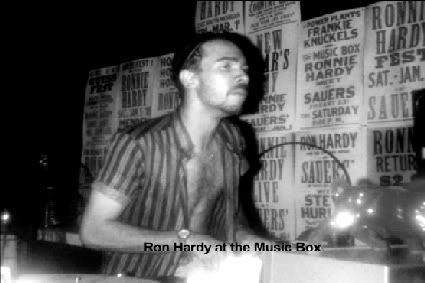
RON HARDY @ The Music Box in Chicago, early 80s

This Ron Hardy edit of ISAAC HAYES - I CAN'T TURN AROUND is also fire, hellfire, like melt the house down fire. Because it's nine minutes of a jacked-up horn-section dominated funk groove with Isaac over the top. It just smells like furious sweat. Every time you go to dancing in a club, you should have to thank Ron Hardy for it. You should have to touch your fingers to one of those little things by the door frame like the one that you touch if you're Jewish. Also what's great about edits like this is the man-machine hybrid: it's not drum-machine and computer beats, it's people playing, but they've been caught in Hardy's time-warp loop device and they can never escape, they can just churn out peak-time burners like this into infinity.

Sunday, October 5, 2008

The Devil, The Author, and The Red Right Hand


BEN STILLER IS NICK CAVE
 

I had the chance to see Nick Cave last night, along with several Bad Seeds. It was by turns aggressive, cathartic, confessional, incantatory. An invigorating performer and consummate showman ("What? No, we can't play that song. Too gloomy. So this next one is about a guy going to the electric chair..")

Cave has an exceptional understanding of all the different points that intersect in being a rock singer - how you're a priest, a magician, a lover, a storyteller, a healer, a vampire, a demon, all at the same time. This kind of shapeshifting energy is the subject of one of his most well-known songs, "Red Right Hand," which warns of a diabolical shadowy figure who operates traceless and sinister, and who's kind of a substitute Satan without being named as such. 

It's a character not unlike the one at the center of Stephen King's Needful Things, who opens up a store in a small town for the sake of carrying out all manner of Faustian bargains with the townspeople - he's got IT, that thing you need the most, for a price, etc. 


Now it should be asked, what is the artistic obsession with the devil, with devil-like or diabolical characters? Because, to put it simply, every artist is the devil. Artistic creation is always creatio ex nihilo, and every creative act challenges God's monopoly on creating. 

Furthermore, what binds the artist and the devil together is that the artistic act, like any act of Lucifer, the fallen angel, is ultimately born of a power inferior to God's. The artist loves the devil because it's both their job not to replace the world of God, but to screw it up, to make trouble, to negate, to intervene. 

There is a hole in the world, the world that God made, because there is a hole in God. This is the Gnostic interpretation, the kind that the institutions of Judeo-Christianity had to fight to contain throughout history. The artist goes to this hole and he picks at it like an eternal wound, and from there he makes new things for the world, out of this hole. Where else do you imagine new things come from? 

Finally, when art dreams of demons, this is because it is thinking about its own origins, because it is reflecting on how it is born of what psychoanalysis calls the drive, the compulsion to repeat, the de-stablizing, addictive urge, of great power that consumes the one who undergoes it, who draws the artist in beyond his self-control.

The red right hand that Nick Cave sings about, that is the hand that holds the pen, that is the hand that is splattered with paint, it is the artist's own hand.

Another song that Nick sang last night was called "We Call Upon the Author to Explain," and its lyrics are a list of unjust suffering, contingent abuses, unexplainable sorrow, and the author is of course in this context God, whom you can call upon all you like but will not answer you. If God wanted to ever answer you, there would be no need for Nick to have a song about it. 

I could not help but think as well of David Foster Wallace, the brilliant, exceptionally-talented novelist, one of the best of his generation, who recently took his own life - one whose writings so often faced hopelessness and despair with rare courage, I could not help but want to call upon him as well to explain, to explain why after all this it seemed that his own words had failed him. What use, I wanted to know, was writing after all, if it could not keep you alive?


Thursday, October 2, 2008

Even Dwarves Started Minimal


Here are some reasons not to be afraid of dread minimal. Because even dwarves started that way: as one can see, it doesn't mean you have to stay there. You can get up on that big-person Harley and kill that shit.

1: Every generation gets the "Sinnerman" remix it deserves. Who takes care of it for us? Luciano, aka Villalobos Jr. It sounds like he's using a live recording, so he includes the applause but drenches it in trebly reverb, which sounds cool. Actually using the live version in general is a cool idea. This mix is pretty great, now that I think about it. It cuts out alot of the verse, loops the piano riff forever, and then all of sudden Nina's free, impassioned pleading soars like a fiery eagle. Intense - it sounds like she's slamming her body on the keys in exhaustion. I picked it up from the Dirty Sound System blog, Alain Finkielkrautrock, which you should read. It's what I would do if I were French and awesome. I'm only one of those things (not French). 


Nina


Luciano

2. Brooklyn Club Jam. Jacques Renault is a much-lauded NY dj who plays at 205 every Tues.


Jacques Renault

I recommend riding for his skills and for this track produced under the "Runaway" alias. Surprisingly it has very little to do with NYC or what New York sounds like, which is good. There's no no wave parts or ESG brittle-bone funk parts or schizo-posturing parts, it's just a deep kind of lo-fi minimal burner with heavy tribal beats and uplifting piano. very solid. It gives me faith that New York can produce straight dance music and not have to 'hot chip'-it up or anything for indie fascism. 


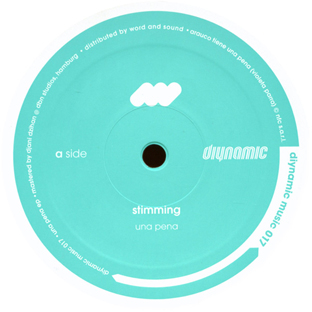
3. Stimming's "Una Pena". More latin-tinged minimal. Very danceable, heavy clap, with a gorgeous, invigorating Espanol vocal from Violeta Parra, an older Chilean singer.


Violeta Parra

Guess what? Her brother is the famous Chilean anti-poet Nicanor Parra, who I know about because my friend Pia is writing on him. The Parras were heavily involved in reviving the Penas in Chile, community, arts and political activist centers that became banned by the military coup that overthrew Allende in the 70s. 

Here's Parra's original. It is pretty great. Youtube = the whole universe.

Violeta Parra - arauco tiene una pena

Infinite Cosmic Lullaby / Suburban Balearic


Amon Duul - Love is Peace


Two acknowledged classics, very recommended. "Love is Peace" is the opener from the Duul's third album, where they trade in their lysergic drum-circle fever beats for some endless mellowed-out voyage through space and time - an infinite cosmic lullaby. When you hear "once I got a hang-up in the time machine"...."love is peace..freedom is harmony..." with disarming intensity, don't think barefoot live Dead twirling, but a shimmering excursion to a utopic counter-world. One of the top ten smoothest Krautrock jams maybe ever, the sonic drift on this one is pretty serious, make sure you keep an eye on the shoreline so you don't get swept to sea.

Decades later, American Analog Set takes the interlocking guitar lines and dreamy infinite groove and transposes it to master-planned communities and strip malls. No coincidence that the album's titled "From Our Living Room to Yours." Call it Suburban Balearic. The psychedelic long-player version of, as SY Lee says, "shouting the poetic truths of high school journal keepers." Here they sing "we left the house to see it shine...when we came back it was gone.." The long lysergic voyage has been transposed, now it's that journey to the end of the night in your parent's car with your closest friends, out on lonely highways awash in lunar glow.  

Addendum: Amon Duul was also a political bug-out art commune in Germany in the 60s. They ended up being two different bands, Amon Duul I and II. For a while Amon Duul I counted as a member Uschi Obermaier, a high-profile glamour girl / rock groupie in Germany at the time (she played maracas) - a bit like the Teutonic Marianne Faithful. 


Uschi Obermaier


There's a new documentary coming out of Obermaier's life, called "Eight Miles High (Das Wilde Leben)" and I wanted to post the clip but it literally has the most retarded "in a world..." voiceover ever, so screw it. Instead, here's Uschi and some other hot German Frauen making bombs in the 1969 pre-feminist cult classic Rote Sonne (Red Sun)

Wednesday, October 1, 2008

Aluar Horns


Aluar Horns (Zaire/Uganda Border)

I got a record needle. The Gemini PT-2000 record player which now functions in my studio is the first fully operational vinyl playback machine which I has ever owned. This is because, I wager, sometimes one is afraid to be happy. Sometimes there is a happiness that hangs so clearly in your eyes, but you recognize its sheer destablizing force, the way it may also threaten to overtake you once you deign to open your arms to it, that you turn away, preferring to cast your glance instead towards inferior delights.

So lord help me, I have a record player now. And I have literally the worldest's goofiest collection, comprised almost solely either of out-jazz rarities or thrift store oddities acquired upwards of ten years ago when I worked in the Salvation Army, and which I have never ever listened to, but never discarded, fuelled only by my good faith in weird records.

This faith was rewarded when I for the first time played "African Ceremonial & Folk Musics." It consists almost entirely of pleasant, unremarkable chants and babbles, but then out of nowhere, there's an insane horn-section jam, which has such a weirdo-wobbly rhythm that I thought my new record player was broken and playing irregularly. The horns overlap in such a loopy, narcotized way, it sounds like Sun Ra remixed by DJ Screw. Or a beardo edit of New Orleans funeral jazz. One of the most surprise sonic bug-outs I've had in a while, a very solid "what the hell is this?" moment was the result, exactly the sort of experience which makes me hoard two dollar thrift store records for ten years.


Enjoy, you won't be disappointed.