Showing posts with label Poly-Rhythmic Freak-outs. Show all posts

Friday, November 27, 2009

Farmer In The City: New York's Tradition Trend

Last Friday I went with friends to Henry Public, a new salon-style bar/restaurant found in Cobble Hill. First we were served tasty beers from a staff clad in checkers and suspenders, and then we took in an ambiance of crickety wood and photos of Frederick Douglass while devouring "hamburger sandwiches" and "french fried potatoes." In short, the experience only furthered the suspicion that any new establishment opening in new york with traction among the aged 30 crowd will most likely be old-timey.


This is not news to anyone in New York with an appetite and the ability to leave their apartments: antique is in, marked by an abundance of speakeasy-style bars and rustic-tinged restaurants: see Freeman's, Marlow and Sons, Hotel Delmano, The Richardson, Walter Foods, etc. Here a predilection for old stuff in interior design is matched at the same time by a drive towards craft in food production. There are several other places in New York culture where old-timey reigns as well. My point here is not to announce several well-observed recent trends, but to group them together in an attempt to analyze their origins and consequences. It's not hard, for example, to connect the dots from the restaurant world to the rise of old-world bakeries and butcheries, to the growing interest in locally-grown, organic food products - the rise of the so-called locavore, who out of both health and environmental interests makes locally-grown products an essential priority. Dovetailing in with locavore-ism is a broader trend towards craft and self-reliance - homemade, hand-constructed, DIY, the sorts of projects found in books like "The Urban Homestead: Your Guide to Self-Sufficient Living In the Heart of the City"


The contemporary value of such drives towards urban farming, local foods, and general self-reliance cannot be underestimated in light of urgent environmental and global economic problems, such as those brought to light in the riveting documentary Collapse: through his analysis of the looming deadine of peak oil production, Michael Ruppert, the engaging, slightly paranoiac expert, effectively makes the case that "urban homesteading" is more than a youthful trend, it represents the possibility for humans to continue to survive once oil production and the modern life which it sustained begins to irrevocably decline. Old-timey or traditional food production is thus in fact quite cutting-edge - it will undoubtedly play a major factor in the restructuring of society which will most likely occur in the wake of peak oil.

You'll find the old-timey vibe on city streets as well these days, thanks to an abundance of beards, solid footwear, tweeds and flannels. Sidewalkers in Brooklyn can bear a passing resemblance to The Band:


Interestingly, The Band's look in this 1969 photo is already retro, a re-do of cowboy-era duds, and their folk-rock sound at the time already a throwback in an era of plugged-in psychedelia. A recent NYT article highlights the expansion of influence by nineteenth-century styles from restaurants to men's fashion: "This Just In From the 1890s." On a further musical note, it should be pointed out that, as is often the case, music was in on the old-timey thing before restaurants figured it out: witness the blossoming of recent subgenres like "freak folk" and the "New Weird America." Before all these guys, though, there was Animal Collective, whose band name is only one example of their ingenuity, a prescient forerunner of cultural trends towards both the rural and the communal. "Sun Will Shine" by Akron Family epitomizes both these qualities, a gospely, twangy folk-rock tune expands into a choral-voiced stomper, drawing out the blues chords in a grand expansion reminiscent of Spiritualized. Akron Family specializes in shambolic folk jamborees, and they're not alone: bands that emphasize collectivity are all the rage, as are group-vocals and afro-inflected tribal beats. In this way, "Animal Collective" isn't only a particular band name, it's almost a description for a kind of band that has emerged in the past five-ten years.

Akron Family - Sun Will Shine


What do these trends, musical, ecological, and gastronomic, share in common? We might detect in them a distrust or weariness with modernity, with the excesses of industrial society and the alienated life that it perpetuates. This is prominent in discourse on contemporary food production: the large-scale industrial farming complex, documented for example in the excellent Food, Inc. wreaks havoc not only on the earth and our biological life, but our existential life as well, obliterating a sense of connectedness. The ground beef that appears in the burger I consume has traveled an invisible path, the result of an obscured production process. In all the antique restaurants, farmer's markets, beards and folk-tunes one can sense an almost a prelapsarian hearkening for a simpler time, a simpler life, a life connected to its own roots, to the past and the traditions that engendered it.

But why now? Why has this urge become so manifest? It's been in the works, you might say, ever since Sept 11, 2001. If you buy the logic behind Time Magazine's latest cover story, the decade that will close at the end of this year represents nothing less than the 'dimming' of the American dream: "Bookended by 9/11 at the start and a financial wipeout at the end, the first 10 years of this century will very likely go down as the most dispiriting and disillusioning decade Americans have lived through in the post–World War II era." The tradition trend, you can say, is in part a widespread reaction to this passing decade of American decline, an attempt to hide-out among the nostalgic ruins of the past from the bleak forecasts of the future. Such a hiding-out was acutely felt in the wake of last year's economic collapse, when at the time the highest-grossing movie in the country was "Paul Blart: Mall Cop," a comedy in which, fittingly enough,the lead character is a fallen authority figure, an incompetent, arrogant boob in the seat of power tasked with protecting the public. The American public flooded the theaters for a bit of cinematic escapism, only to get their loser president thrust once again in their faces.


Worth noting here is a concomitant but distinctly separate trend, the rise of cuteness, whose trajectory was recently expertly traced by Jim Windolf in an article for Vanity Fair, "Addicted to Cute." Here Windolf points out that cuteness exploded in Japanese culture after the end of WWII, a result of a widespread feeling of the loss of political supremacy. The same causality, Windolf argues, is at work in the rise of cuteness in the US since 2001: our entitled sense of global hegemony shattered by the attacks, we in part sought refuge in innocent, calming visions of lolcats and other adorable internet memes.


In this historical context, what cute and old-timey share as cultural values is that they mark a feeling of the loss of authority. In her essay "What Is Authority?" from the late fifties, Hannah Arendt called attention to the broad collapse of traditional authority in the twentieth-century. This collapse led, she argued, to the generation of new forms of domination, most notably the strains of fascist and socialist totalitarianism. Authority, Arendt claims, takes its strength from being beyond argument. Authority doesn't try to persuade you, it doesn't try to violently force you, it just holds an almost mythic sway over your actions and obedience. You follow authority just because. It's not hard to see how a cultural hankering for tradition might result from a certain sense of a recent loss of American supremacy in particular and a decline in political authority in general. Tradition, Arendt says, is central to maintaining authority, because authority is all about the continuing legitimacy of the past. In the wake of the hollowing out of the American dream of the past ten years, American culture began to re-organize itself, like cells in an organism working to close over a wound.

Oddly enough, I would argue that the cute trend in part reflects the same need for authority. Cuteness affects you prior to your ability to judge it. Cuteness does not persuade or force, cuteness acts on you in a primal, biological way. You cannot evaluate or criticize it, and its effect is immediate. To experience a cute thing is to take a momentary respite from the adult world of responsibilities and decision-making: neither you nor it can be criticized or taken to task. Cuteness provides a similar escape from the demands of independent, critical thinking that submission to authority does. While the tradition trend can be seen as a reaction to contemporary circumstances, it is neither inherently good or bad, productive or harmful. Like any trend, the tradition trend contains a mixture of ideological and progressive elements. In part, it is undoubtedly an escape, a national version of going to see Paul Blart for ten years. The past remembered is never the past taken place: memory, whether personal or cultural, is always a stand-in, a cheap substitute for real events. The "good old days" evoked by Henry Public and other such places were never really that good, as Merle Haggard once sang:


While recently discussing these matters, a friend remarked that an acquaintance of hers, an internet food writer of some renown, had been sharing with her dreams of moving from New York and starting a farm. An inevitable consequence, it would seem, of a rural-obsessed metropolis: move out to the sticks! wear Hunter boots! raise vegetables while wearing a beard! Pure heaven. As Merle's song points out, such images neatly leave out all the thankless toil, labor and dedication characteristic of rural life which spurred the drive for modern technological convenience in the first place. On the other hand, the correlate drives towards local produce and self-reliance generated by a cultural interest in the lifestyles of the past will be invaluable in the near future. The American dream, insofar as it has been shored up by sixty years of geopolitical arrogance and the unshakeable dogma of free-market capitalism, has proven untenable, and hopefully the trend towards tradition will provide the grounds not for regressing to an old America, but for thinking it anew, out of the possibilities left still half-buried in the past.

Finally, there's a great Scott Walker tune, from Tilt, whose title encapsulates the beards, tweeds and speakeasies of New York 2009: "Farmer in the City." This stirring and unsettling tune is carried by a protagonist, an outsider moving across a disorienting landscape, who feels like a farmer in the city, unfamiliar with his surroundings. If the tradition trend imagines us as happy together in the past, planting crops and singing in a big group, Walker imagines the solitary farmer alone in the future. In this context it's a reminder that the wilderness is not only the rural idyll we might see on the wall of a rustic-themed pub in Williamsburg, it is also the historical future which we must venture into in order to solve the problems of today, a wilderness ultimately without the comforts of a mythic past or anthropomorphic feline.

Scott Walker - Farmer in the City

Sunday, April 20, 2008

NIGER PLEASE


Nigeria 70

Two recently release compilations have drawn attention again to Nigeria's vibrant musical tradition. These are: Nigeria Special 1970-1976, and Nigeria Disco Funk Special. These compilations are good, I am willing to state, and I will heartly rebuke anyone to the contrary.

I must say however that the compilation featured here, Nigeria 70, is markedly superior to both of those previously mentioned. If you have access to these other comps, I entreat you to see for yourself. If you do not, I entreat you to believe me.

Now unfortunately for you, lost to the abysses of time is the third disc of this boxed set, which is devoted entirely to interviews with relevant musicians and general informativeness. You will have to make due with two discs of passionate, soul-tingling 70s afro-funk wildness.

Complicated Drumming Technique

Commercial for DVD of unparalleled drum training from legendary percussionist Jens Hannemann. Educational DVD presented by Fred Armisen and available from Drag City


Customer review from Amazon.com: "Like Sudoku, Hannemann's technique is easy to learn but hard to master. And like Sudoku, I predict that this DVD will sweep the world by storm. A Gale Force storm. A storm that leaves many victims in its path, but empowers the rest of the community to join together to rebuild in its wake. Then Hannemann can step in and release a charity CD to raise funds, but more importantly ... awareness."

Sunday, April 13, 2008

Astro-Tropicalia


Magma - Udu Wudu


It would not be any kind of exaggeration to say that a decent line of critical inquiry can always be opened up by asking a stupid question, a question any fifth grader would know. Critical thinking is, to invoke Jeff Foxworthy's popular show, not smarter than a fifth grader.
For example, it doesn't know the difference between an old thing and a new thing. So it asks again, and when it asks, it's possible for it to find there another understanding than the one commonly shared.
There's at least one another way that historical time, marked by a difference between old and new, can be understood. In a way, we can say that historical time is born in a moment that is not just one moment. This kind is actually several moments at once, it's actually past, present and future, occurring alongside each other in a densely compacted burst. In the history of music, it's an old song that sounds new and fresh now, and in a such a way that it seems to open up new artistic possibilities - that it seems to point towards a particular new space for exploration.

For example, I will say that 'Udu Wudu' by Magma is a great new old song.


Magma definitely counts as a band so weird that there's a good chance a lot of its work hasn't really arrived yet, as they say, a lot of it remains like a destinal arrow that has been arc'ed for a long one into the future. Masterminded by drummer Christian Vander, Magma's music centers around a complex sci-fi narrative about colonizing another planet, and is sung in an alien argot of Vander's devising.


One work by Magma whose arrow has yet to land is clearly present in this clip, from TV 1978. Not joking, you should probably not watch this whole thing. It's just too bugged. Watch like, two minutes of it. You will get the idea and will avoid the chance of getting sucked into a furious French prog vortex. Such is the nature of the future - you shouldn't look headlong into it any longer than you should stare at the sun, no matter that lingering urge you have, deriving from that nerve twitch you have in the back of your skull, where neck meets spine, which would love nothing more than to one day look right at the solar orb until your pupils melt.

Magma "Hhai"


As a clip, it's bugged-out enough that the kind of disorienting or confusing effect it has induces a reflection on those categories that one unconsciously deploys all the time in order to make sense of some strange new thing. One starts to reflect because these categories have stopped working. Because reflection is spawned in the breakdown.

Reflection hides when things run smoothly. That's not reflection's job, to dissect a working organism, anymore than an autopsy is designed to take someone apart in order to figure out why they're still alive. Reflection is the guy on the outside, the outcast, the wallflower, the doctor, the analyst, the researcher, the jilted lover.

Now a song by Magma whose time is now, in the sense that W. Benjamin would say now, whose time has come to heard for the first time, is Udu Wudu, the title track from their 1976 album. Ricardo Villalobos' track Enfants is the first insight into what I want to call Saturnalia, in other words, outer-space tropicalia, and it's accomplished by sampling Magma. Not only is it a totally weird French 70s prog group, the record in particular is a 25th anniversary concert for the band where all the songs are sung by children. The track is infectiously, naively joyous, but also in a curiously rhythmic and so-lightly otherworldly way.

Enfants was recorded the day before R. Villalobos' son was born. So a track for a newborn son with kids singing marks at the same time a being-born anew of the original composition. So Udu Wudu follows very much in the wake of what RV calls attention to by singling out this track. When a DJ revisits the catalog of an older artist in such a way, the effect is often that of saying "look, go back through the discography, now only listen to the tracks that sound like this one". He awakens a curatorial urge in the sleepless nerds that hold infinite vigil in the digital commons.
The strongest effect of singing in an alien tongue is that it keeps the listener permanently at bay, permanently on some level always hearing an inner echo of 'what the hell am I listening to?', but such an echo that's been filtered in such a way that it doesn't interfere with the frequencies of pleasure and jouissance.

AC Radio April Edition: Notes on Saturnalia
1. Ricardo Villalobos "Enfants"
2. Magma "Udu Wudu"
3. Roberto di Simone "Secondo Coro Delle Lavandale"
4. Lula Cortes e Ze Ramalho "Trilha de Sume"
5. Brian Eno and David Byrne - "New Feet"
6. Babla - "Kabhi Hota Nahin"
7. Mogallar - "Katip Arzvhalim Yaz Yare Boyle"


Wednesday, April 9, 2008

Windless Meridian and Sci-Fi Shopping


Wednesday, you windless meridian of life. The working week's doldromian ass-crack. The furthest point away from any weekend past or future, you are the nadir of fun in the cycle of time. We are not powerless against you though, we can use the powers of blog-posting to wreak our spiteful revenge.

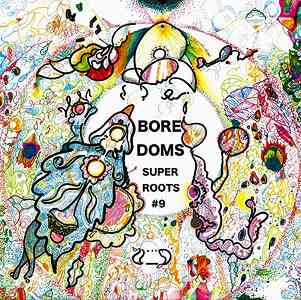
We will do this by posting Super Roots 9 by the Boredoms. In which the Boredoms' ecstatic polyrhythmic assault is joined by the wordless vocals of a large choir, a choir so eminently talented and precise it really sounds like a mellotron, or other amusingly old piece of sampling technology. An afro-Scriabin vibe predominates.

It has been brought to our attention that we are perhaps a few weeks or so behind in posting this, that any good boredomian has most likely procured it by now.

The intention of AC is not to be the first place to go for music. Or the best place. The intention of AC is to be a strange place to go for music.

One key editorial policy here is the well-known maxim from Hegel: The owl of Minerva flies at dusk. This owl, whose trajectory mirrors that of Understanding, has to wait until all the wildness is over, until shadowy calmness has begun to spread, before it can take flight.

So while you may already have Super Roots 9 by the Boredoms, there is a strong chance that you were not aware that it was recorded in a shopping mall. In Harajuku. And that this shopping mall is called LaForet, and that it is a very advanced shopping mall. This should be evident by the fact that: the Boredoms recorded Super Roots 9 there. In Japan, this is not even a big deal. If Sonic Youth went and recorded at one of the overweeded, abandoned shopping facilities that now litter midwest America in a very Dawn of the Dead fashion, it would be conceptual art.

LaForet, Harajuku, Tokyo


LaForet has several gallery/museum spaces built into it. For example, when I was there, Brian Eno was showing his newest work, "77 Million Paintings".

77 Million Paintings


LaForet often gets art director Nagi Noda to do campaigns for them. Noda's work is so surreally imaginative, one forgets that the Japanese don't even do drugs really. Can you imagine if they did? I don't want to think about it.


Not sure if it is clear from the image, but the idea is to have a model in a funny outfit and then have another model dressed as the cute, haunting shadow of the first.

Here's a Coca-Cola video she directed. It's not CGI. That's to say, it is a huge room full of actors standing perfectly still in imitation of a kind of Eadweard Muybridge early-photography stop-motion effect.

Muybridge's "The Horse in Motion"


And here is a video she did where poodles exercise. It follows the artistic logic of coming up with a bizarre premise, and then simply letting that premise run on a little too long. This is a highly effective strategy, as it makes the viewer begin to question whether it's not actually a real thing, a thing in the world, which goes on with not much point to it, as things in the world often do, as opposed to an elaborate art joke, which makes its point and then exits the stage.

Sunday, April 6, 2008

The Joys of Strange Proximity

or, Excursions in the Acid-Rainforest


Lula Cortes and Ze Ramalho - "Trilha de Sum"

Most of the rhetoric surrounding the reissue of Paebiru centers around the trope of the 'lost classic', of which this album is a shining example. The attendant myth involves almost all the original copies being lost in a warehouse fire. A lot of the pleasure of being an obscure music obsessive involves the joy of strange proximity: bringing what has been far, what has been distant and forgotten, once again into the light, to pull something from oblivion and hold it to one's ears. Then one hears not only the sound of the record, but as well the colorless ruins of the past, something almost like the crackle of old vinyl. An album that sounds something like a tropacalian mutation of Amon Duul, aka some deep acid-rainforest shit, and also it was supposed to be destroyed in a warehouse fire, is a stellar candidate for such an obsessive pleasure.

In this way, the context risks overshadowing the content. From Stylus Magazine's review: "With all the murk surrounding the album, it’s easy to overlook the frankly silly nature of what we’re dealing with. Say the following out loud: Paêbirú is an obscure Brazilian psych concept album about the four elements (earth, air, fire, water)... age and scarcity lend this record a legitimacy—and audience—it might otherwise be unable to muster."

Not to say the record doesn't have its transcendental bursts. The opening track, presented here, is evidence enough to the contrary.

The sounds of this 60-70s style of loose, improvised psychedelic music, with its genre-bleeding and unbounded vibe, are often a sonic shorthand for a historical contemporaneous understanding of freedom. It's one bound up with the 'passion for the real' mentioned in the previous post, as Alain Badiou has characterized it. Badiou has said that from a philosophical point of view, the twentieth-century is marked by a 'passion for the real'. That underlying the diverse artistic, intellectual and political movements of the last hundred years is a fundamental reckoning with a drive towards the 'real', in the sense of the visceral, the immediate, the raw, all what supposedly lies beyond the mediated, illusory, ideological facades that distract us in modern life.

It's not hard to connect how bugged-out rainforest jams might participate in this passion, which in the lives of educated urban white persons can often manifest itself as a fascination for raw-dog style, for the sounds and images associated with the concrete, the immediate, the intuitive, the pre-critical, the ecstatic. Psych record collecting = passion for the real.

It should be noted that in The Century, Badiou formulates an alternate passion for the real, but one that doesn't look for the real among any kind of 'thing', any kind of 'identity' - not even a rare record. This passion is associated by Badiou with Malevich's White on White - which is about uncovering the real as the gap between place and taking-place.

In other words, to continue the short circuit between Badiou's philosophy and music, the central claim about The Century is about the passage from psych jams to minimal beats.

Sunday, March 2, 2008

Orchestre Poly-Rythmo

A while back someone sent me a Youtube clip of some puppets playing a wild psychedelic Afro beat song. Yes puppets. The song is amazing and speaks for itself. It is full of loud yelps and lo-fi wickedness.

Orchestre Poly-Rythmo de Contonou Dahomey turn out to be from Benin (formally called Dahomey), a small country on the West coast of Africa. According to the WFMU blog, Beware of the Blog, Orchetre Poly-Rythmo have put out 50 LPs and 100s of EPs. Two amazing ones come from the blog Analog Africa, which is putting out what should be an amazing comp on the travels and research of the author. The blog has some free samples that are worth checking out.
Here are 2 tracks from O.P.R that are from a lost master tape found in some recording studio in Benin recently. They are completely distorted and fuzzed out...making them sound like an African White Light/White Heat. Ahouli Vou Yelli has this John Cale organ solo that will melt your brain.


Turns out Soundways released a compilation of some of the bands greatest hits. Definitely worth the money.